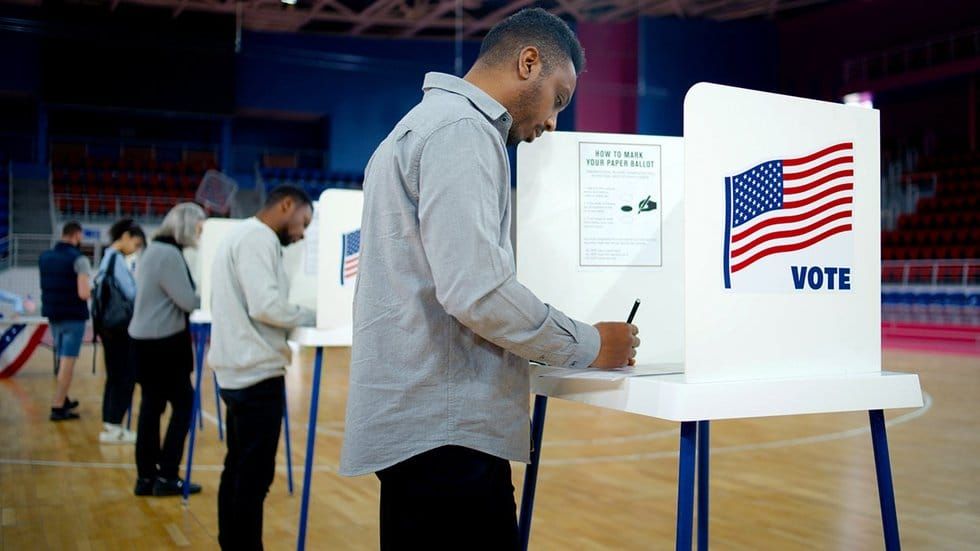
The Democracy Project is an attempt to intervene at the point where democratic legitimacy now most often fails: the translation of political intent into technical language, especially legislation and regulation.
The starting diagnosis is blunt. In most contemporary democracies, the formal power to vote, debate, or express preferences still exists, but the practical power to shape binding rules has migrated to a narrow class of actors—professional lobbyists, specialized law firms, policy shops, and regulatory insiders. This is not primarily because of corruption or bad faith, but because drafting law has become a technical, high-friction, expert-only activity. Once politics enters the drafting phase, most citizens, civil society groups, and even elected officials are effectively locked out.
The Democracy Project exists to reopen that space—not by replacing institutions, but by lowering the technical barrier to participation while preserving governance discipline.
Legislation drafting as the democratic bottleneck
Modern law is not decided in speeches or votes. It is decided in:
- definitions,
- exceptions,
- cross-references,
- implementation clauses,
- enforcement language.
Lobbyists dominate not because they “win arguments,” but because they control these mechanics. They know how to draft language that:
- survives legal review,
- fits regulatory frameworks,
- quietly shifts incentives,
- and resists later challenge.
The Democracy Project treats this as the central democratic failure: the separation of political legitimacy from drafting competence.
AI as a drafting instrument, not a decision-maker
The project uses AI not to “decide policy” or “generate laws,” but as a technical prosthesis that allows non-experts to work at the drafting level without surrendering authority.
AI is used to:
- translate plain-language intentions into legally structured drafts,
- surface tradeoffs embedded in wording choices,
- compare alternative formulations and their implications,
- trace how small textual changes cascade across a statute.
Crucially, AI outputs are never treated as authoritative. They are candidates, scaffolds, and stress tests. Ownership of the draft—and responsibility for its consequences—remains human and explicit.
This is where ACP discipline is essential: without it, AI-assisted drafting would simply become a faster, less visible form of lobbying.
Structured participation, not populist free-for-all
The Democracy Project is not a platform for mass suggestion boxes or unfiltered crowdsourcing. That approach tends to produce noise, polarization, or symbolic input with no binding force.
Instead, participation is structured around roles and stages:
- citizens, advocacy groups, or domain experts articulate goals, constraints, and concerns;
- drafts are produced, revised, and challenged within defined procedural bounds;
- disagreements are preserved and documented rather than prematurely reconciled.
This mirrors how real lawmaking works, but makes the process legible and accessible rather than opaque and captured.
Contestability and traceability as democratic safeguards
A core feature of the project is that every draft retains a traceable history:
- who proposed what,
- why certain formulations were chosen,
- what objections were raised and not resolved.
This matters because democratic failure often happens after passage, when responsibility evaporates. Laws are treated as inevitable outcomes rather than contested artifacts.
By keeping drafting history visible, the Democracy Project preserves contestability after the fact—for courts, journalists, watchdogs, and future legislators.
From participation to institutional interface
The project is designed to interface with real institutions, not to bypass them. Drafts produced within the system are meant to be:
- submitted to legislatures,
- used by committees,
- examined by regulators,
- challenged by opposing parties.
The aim is not to “outflank” lobbyists, but to break their monopoly on technical fluency. When more actors can draft competently, influence must be earned through argument and accountability rather than procedural control.
What problem the Democracy Project is trying to solve
The Democracy Project addresses a specific, structural democratic breakdown:
- Citizens and civil society still have voice, but lack drafting power.
- Elected officials have authority, but rely heavily on external technical writers.
- Lobbyists dominate not by persuasion alone, but by controlling the language of law.
By combining AI-assisted drafting with strict governance constraints (ownership, contestability, refusal), the project aims to re-democratize the most consequential layer of policymaking without collapsing into populism or technocracy.
In short, the Democracy Project treats democracy not as opinion aggregation, but as shared authorship of binding rules—and asks whether that authorship can be widened again without losing coherence, legality, or responsibility.
Member discussion: