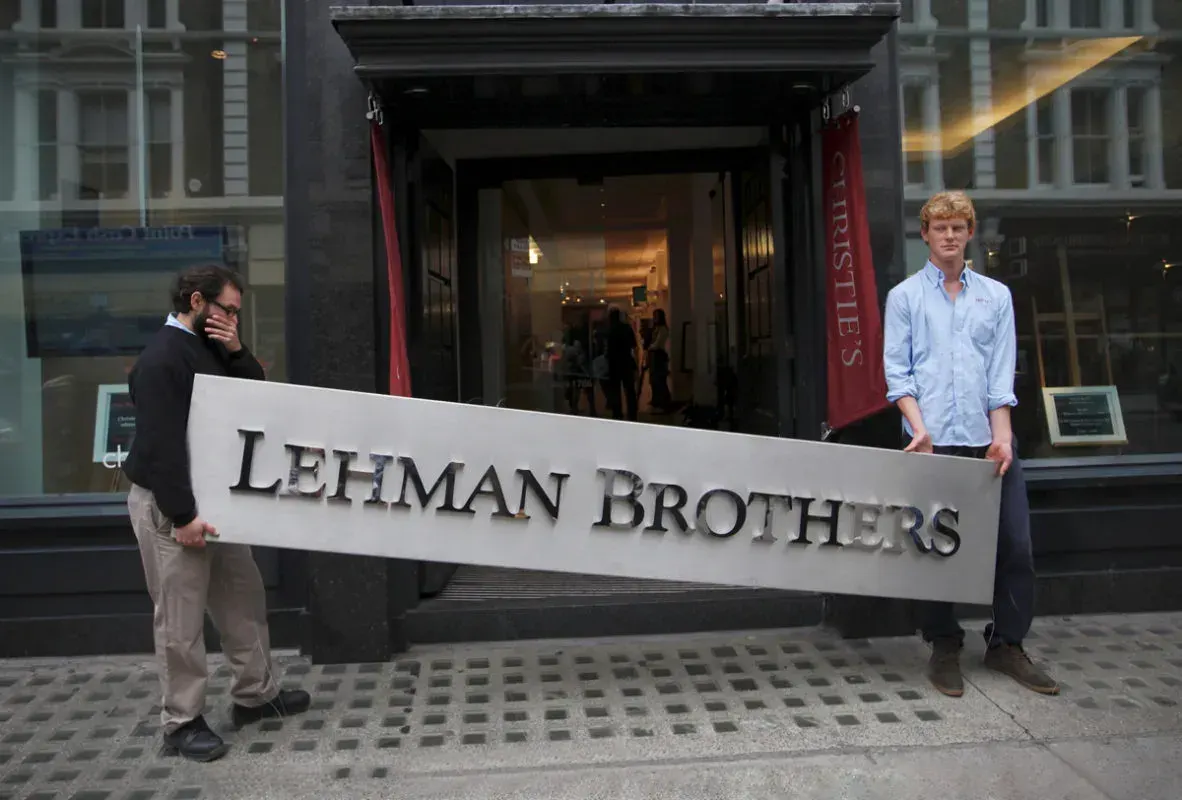
The Leverage Touchdown: When Stability Looks Like Cowardice
Case Type
Decision-forcing institutional analogue
(Financial governance / systemic risk)
Core Themes
- Action bias in expert systems
- Diffuse responsibility and concentrated reward
- “Soft landing” illusions
- Why restraint is punished in boom times
- Systemic risk as accumulated ego
Case Part I: The Situation (Pre-2008 Financial System)
The Context
Timeframe: 2003–2007
Actors:
- Investment banks
- Rating agencies
- Regulators (SEC, Federal Reserve, Treasury)
- Institutional investors
- Senior executives and boards
The Environment
- Low interest rates
- Rising housing prices
- Expanding securitization
- Growing leverage across the system
Financial innovation is widely celebrated:
- mortgage-backed securities,
- collateralized debt obligations (CDOs),
- tranching and risk dispersion.
The dominant belief:
“Risk hasn’t disappeared — it’s been managed.”
Case Part II: The Decision Frame (Seen From Inside)
Senior leaders across institutions face repeated choices:
- Continue increasing leverage and exposure
- higher returns,
- competitive parity,
- market approval,
- career advancement.
- Pull back / de-leverage
- lower returns,
- investor dissatisfaction,
- reputational risk (“overly conservative”),
- loss of market share.
Crucially, no single decision appears catastrophic. Each is incremental. Each is defensible in isolation.
Case Part III: Why This Is a Touchdown Bias Case
This is not a single hail-mary throw.
It is hundreds of short touchdown attempts, rewarded consistently.
Structural features
- Upside is immediate and visible (quarterly profits, bonuses).
- Downside is delayed and socialized.
- Models reinforce confidence.
- Peer behavior normalizes risk.
- Regulators rely on market discipline.
This is ego at scale:
Not “I can beat the defense,”
but “everyone is scoring this way.”
Case Part IV: The Checkdowns That Were Available
This is the critical pedagogical move.
The system did have checkdowns:
- tighter leverage caps,
- counter-cyclical capital requirements,
- simpler products,
- slower growth,
- regulatory skepticism of correlated risk.
But these options:
- reduced visible returns,
- looked like overreaction,
- required actors to accept underperformance,
- produced no narrative payoff.
Choosing them meant looking wrong until proven right.
Case Part V: Ego Without Villains (Again)
As with Iraq, this case should not be taught as bad actors behaving badly.
Key teaching point:
The system punished restraint more reliably than it punished recklessness.
Individuals who:
- warned about housing bubbles,
- questioned correlation assumptions,
- resisted leverage,
were marginalized, ignored, or overruled.
This is institutional ego:
- confidence amplified by consensus,
- dissent framed as negativity,
- caution interpreted as incompetence.
Case Part VI: The Collapse (The Interception)
Trigger moments
- Housing price declines
- Liquidity freezes
- Counterparty uncertainty
What had been:
- abstract risk,
- “tail events,”
- model outputs,
becomes systemic failure.
The touchdown logic reverses instantly:
- leverage magnifies losses,
- correlations converge,
- trust evaporates.
The system experiences not one interception, but a cascade.
Case Part VII: Aftermath and Responsibility Diffusion
Post-crisis, familiar patterns appear:
- “No one could have known.”
- “The models failed.”
- “The system incentivized behavior.”
Bonuses are clawed back unevenly.
Careers continue.
The public absorbs the downside.
This is the final analogy:
The quarterback threw all season.
The fans paid for the loss.
Case Part VIII: Compare to the Mahomes Slide (Again)
| Football | Financial System |
|---|---|
| Late-game lead | Long expansion |
| Scramble lane | Cheap credit |
| Slide | De-leveraging |
| Touchdown | Higher leverage |
| Certainty preserved | Fragility increased |
The question is no longer moral:
Why couldn’t the system slow down before it had to stop?
Case Part IX: Governance Failure Identified
Participants should articulate that the failure was not:
- lack of intelligence,
- lack of warnings,
- lack of models.
It was lack of institutional permission to be boring.
No actor was empowered to say:
“We’re winning. Let’s not score again.”
Case Part X: Bridging to ACP
This is where ACP enters naturally.
ACP principles mapped
- Refusal legitimacy → declining leverage without stigma
- Scope locks → limits on product complexity
- Phase awareness → expansion vs stability modes
- Auditability → understanding correlated risk in advance
- Human ownership → no “the market decided” excuses
ACP does not eliminate risk.
It prevents risk accumulation disguised as success.
Teaching Notes (Facilitator)
What this case teaches
- Touchdown bias compounds quietly.
- Ego can be collective and statistical.
- Systems fail long before they collapse.
Common discussion traps
- Blaming greed alone
- Treating crisis as unforeseeable
- Over-focusing on villains
Success outcome
Participants leave able to say:
“The problem wasn’t leverage.
It was that restraint had no status.”
Member discussion: