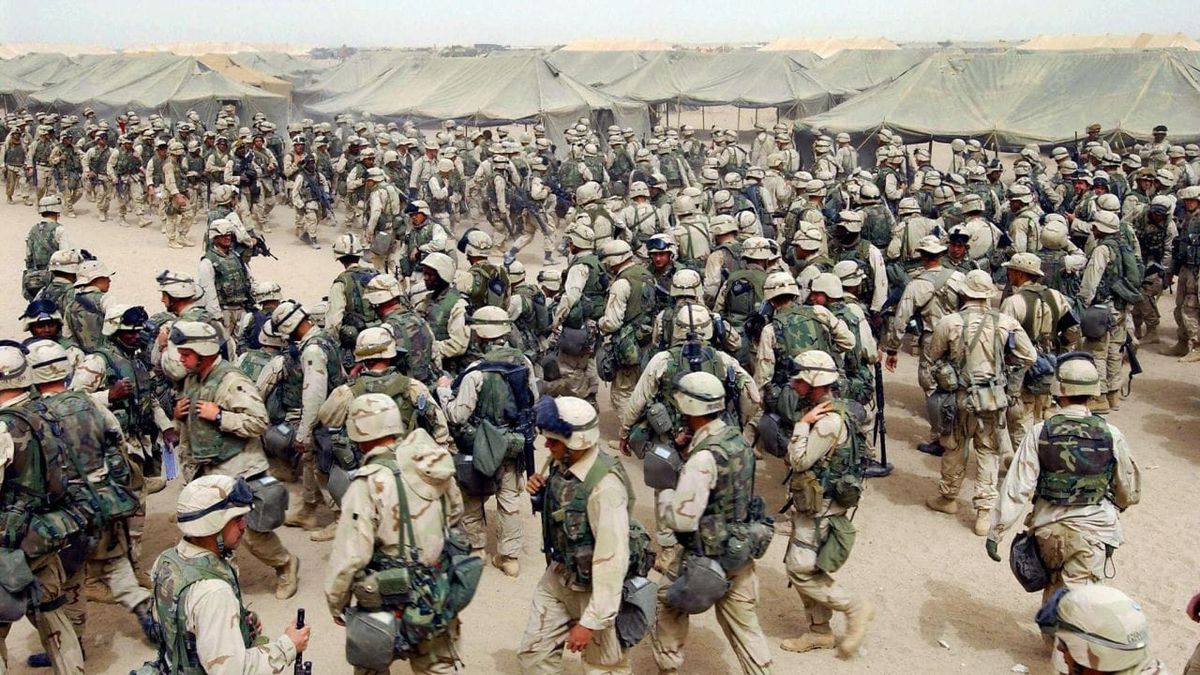
The Hail Mary: When Institutions Confuse Action with Resolution
Case Type
Decision-forcing institutional analogue
(Designed to pair directly with The Checkdown Decision)
Core Themes
- Action bias
- Narrative pressure
- Ego as institutional incentive
- Hail-Mary decision-making
- Irreversibility vs. restraint
Case Part I: The Situation (U.S. Government)
The Context
Timeframe: Late 2002 – Early 2003
Actors: Senior U.S. civilian leadership, intelligence community, military planners
Environment: Post-9/11, heightened fear, intense public and congressional pressure
The United States faces:
- a traumatic recent failure (9/11),
- public demand for decisive action,
- intelligence uncertainty,
- reputational risk if perceived as passive.
Iraq is framed as:
- a potential threat,
- a symbolic locus of unresolved danger,
- a test of U.S. credibility.
The Decision Frame
Senior leaders are presented with a choice that appears binary:
- Invade Iraq
- decisive, visible, narratively satisfying,
- framed as resolving uncertainty through action.
- Do not invade (containment, inspections, deterrence)
- slower, ambiguous, politically vulnerable,
- framed as indecision or weakness.
The second option is not literally inaction—but it looks like it.
Case Part II: Why This Is a Hail Mary
Participants should be pushed to identify what makes this analogous to a late-game, high-risk throw.
Structural features
- High uncertainty about intelligence
- High visibility of leadership decision
- Asymmetric downside if wrong
- Diffuse accountability after the fact
- Narrative framing that equates action with courage
This is a textbook hail-mary setup:
“If we act boldly, we look strong.
If we hesitate, we look weak.
If we act and fail… we’ll deal with that later.”
Case Part III: The Checkdown That Was Available (But Rejected)
This is the crucial teaching move.
The alternative to invasion was not passivity. It included:
- continued weapons inspections,
- containment and sanctions,
- regional deterrence,
- intelligence refinement,
- coalition maintenance.
In football terms, this is:
- kneeling,
- running,
- checking down,
- playing defense.
But these options:
- did not promise narrative closure,
- did not resolve uncertainty visibly,
- did not offer a “victory moment.”
They preserved optionality, not glory.
Case Part IV: Ego Without Villains
This case should not be taught as moral failure or bad faith.
Key insight for participants:
Ego here is not arrogance — it is institutional action bias.
No single actor needed to be reckless.
The system itself rewarded:
- decisiveness over restraint,
- initiative over caution,
- visibility over reversibility.
The invasion functioned as a touchdown attempt:
- high upside (decisive resolution),
- high downside (long-term instability),
- framed as leadership.
Case Part V: After the Play
Participants are asked to reason forward without hindsight but then allowed to observe consequences.
Observed outcomes
- regime change achieved (short-term “completion”),
- long-term instability,
- regional spillover,
- credibility erosion,
- responsibility diffusion (“mistakes were made”).
The system absorbed the downside — not the decision-makers individually.
This is the key analogy:
The quarterback threw the ball.
The team lived with the interception for twenty years.
Case Part VI: Compare to the Mahomes Slide
Facilitators explicitly bring the earlier case back.
| Football | Iraq Decision |
|---|---|
| Late-game lead | Post-9/11 global dominance |
| Scramble opportunity | Military superiority |
| Slide | Containment / inspection |
| Touchdown attempt | Invasion |
| Certainty preserved | Uncertainty magnified |
The question is not:
“Was the invasion right or wrong?”
The question is:
Why was the system structurally unable to choose the checkdown?
Case Part VII: Decision-Forcing Questions
Participants must answer as system designers, not historians.
- What incentives made restraint politically costly?
- Who would have been blamed for “doing nothing”?
- Who bore responsibility for long-term consequences?
- What governance mechanism could have slowed or constrained the decision?
- What would a “two-key” or “scope lock” analogue have looked like?
Case Part VIII: Bridging to Governance Architecture
Only now do we generalize.
Core teaching insight
Institutions routinely mistake:
- action for control, and
- visibility for resolution.
They over-value touchdowns because touchdowns:
- resolve narratives,
- concentrate credit,
- signal confidence.
They under-value checkdowns because checkdowns:
- look like fear,
- preserve ambiguity,
- defer closure.
ACP’s relevance is now obvious:
- it formalizes the checkdown,
- legitimizes refusal and delay,
- keeps uncertainty visible rather than “resolved by force.”
Teaching Note (for Facilitator)
What this case teaches
- Hail-Mary decisions are not emotional lapses; they are institutional defaults under pressure.
- Ego operates through incentives, not personalities.
- The most dangerous moment is when leaders feel compelled to prove decisiveness.
What success looks like
Participants leave able to say:
“The problem wasn’t intelligence failure alone.
It was a system that could not tolerate kneel-downs.”
Member discussion: