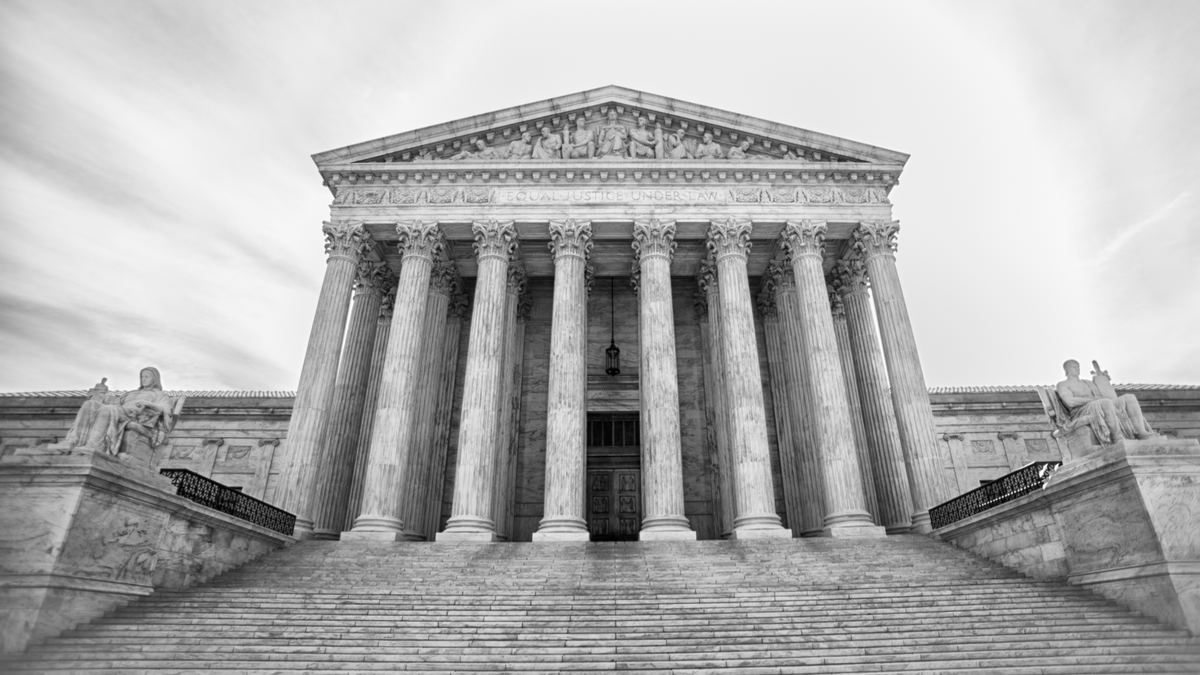
Judicial Review Without Participation
(Test Post — Non-Canonical, Maximal ACP Stack Applied)
Artifact Definition
Case: Food and Drug Administration v. R. J. Reynolds Vapor Co. et al.
Citation: 606 U.S. 226 (2025)
Court: Supreme Court of the United States
Decision Date: June 20, 2025
Domain: Administrative law · standing · venue · regulatory design
Artifact Type: Binding judicial opinion with dissent
Purpose of Analysis: Governance-level interpretation of access to judicial review in a closed regulatory scheme
Case Context Capsule (CCC)
Parties
Petitioners are the Food and Drug Administration and federal officials.
Respondents are R. J. Reynolds Vapor Company and affiliated retailers.
Trigger
The FDA denied a manufacturer’s premarket tobacco product application (PMTA) under the Tobacco Control Act. Retailers that would have sold the product joined the manufacturer in seeking judicial review.
Claims
Respondents argued that the FDA’s denial was unlawful and that retailers qualify as “persons adversely affected” under 21 U.S.C. § 387l(a)(1), entitling them to judicial review.
Relief Sought
Vacatur of the FDA denial and remand.
Procedural Posture
Lower courts allowed retailer participation. The Supreme Court granted certiorari to determine whether retailers have statutory standing and whether venue was proper.
Question Presented
Whether retailers economically affected by an FDA denial may seek judicial review under the Tobacco Control Act.
What the Court Decides
The majority holds that retailers economically harmed by the FDA’s denial are “persons adversely affected” within the meaning of the statute and may seek judicial review. Drawing on administrative law precedent, the Court reads the review provision expansively. Lost sales and potential criminal liability are sufficient to place retailers within the statute’s zone of interests.
The holding is statutory rather than constitutional. The Court does not address the legality of the FDA’s decision, does not alter substantive regulatory standards, and does not grant retailers participatory rights in the administrative process itself. It resolves access to review, not the merits of regulation.
What the Court Reallocates
The Tobacco Control Act establishes a closed premarket approval regime. Manufacturers submit evidence; the FDA evaluates; third parties have no formal role. That structure remains intact administratively. What changes is the trigger for judicial review.
Parties excluded from the regulatory process may now initiate judicial scrutiny after the fact. Participation and review are decoupled. Courts are asked to assess agency action at the request of actors who never bore evidentiary burdens or engaged the process Congress designed.
This is not a doctrinal innovation. It is a procedural reallocation with institutional effects.
Litigation as a Governance Mechanism (Amendment A1)
The practical effect of the ruling is to lower the cost of judicialization for regulated industries. Retailers and manufacturers may form litigation coalitions, enabling venue selection that would be unavailable to manufacturers alone. Agency efforts to channel review into particular circuits or procedural pathways are weakened.
This is not an allegation of strategic abuse. It is a description of predictable adaptation once access expands. Litigation becomes a governance tool through which regulatory outcomes are contested outside the administrative process.
Institutional Asymmetry Register (Amendment A2)
| Asymmetry | Effect |
|---|---|
| Agency vs regulated entities | Agency loses gatekeeping control over review |
| Process insiders vs outsiders | Outsiders gain judicial leverage |
| National regulator vs circuit courts | Fragmentation risk increases |
| Public health vs economic interests | Delay favors challengers |
The decision amplifies existing asymmetries rather than correcting them.
Regulatory Scheme Integrity Test (Amendment A4)
The PMTA framework is intentionally bilateral and front-loaded. Evidence is developed before market entry, and regulatory risk is borne upfront by manufacturers.
Allowing non-participants to challenge denials after the fact introduces permeability at the judicial stage. Review is detached from evidentiary participation. Incentives shift upstream as actors anticipate post-hoc judicial access rather than ex-ante regulatory compliance.
The scheme remains formally closed, but functionally porous.
Temporal Governance Effects (Amendment B1)
Time operates as an implicit governance lever. While review proceeds, regulatory outcomes remain unsettled. Products remain in limbo. Enforcement timelines stretch.
Delay systematically favors challengers rather than regulators. This redistribution of time is not ordered by the Court, but it is produced by the procedural configuration the Court authorizes.
The Dissent as Diagnostic (Amendment A3)
Justice Jackson’s dissent, joined by Justice Sotomayor, frames the case as one of institutional design rather than economic injury. In her view, the zone-of-interests inquiry must focus on the substantive provision allegedly violated, not merely the review clause.
The dissent warns that collapsing standing into downstream economic effect undermines Congress’s regulatory design and invites venue manipulation. It treats retailer standing not as access expansion but as erosion of process discipline.
Dissent classification:
- Type: Institutional design dissent
- Risk horizon: Medium-to-long term
- Failure mode: Judicial reopening of closed regulatory systems
The majority does not directly engage this warning.
Fragmented Enforcement Without Resolution
The decision leaves legality unresolved and agency authority nominally intact. What changes is enforcement topology. Access to courts expands. Review becomes contingent on litigation capacity. Regulatory outcomes depend increasingly on where and how challenges are brought.
This is governance through procedure rather than policy.
Experimental Counterfactual: If the Dissent Is Right (Amendment C1 — Exploratory)
If the dissent’s concern proves accurate, closed regulatory regimes may erode through repeated judicial reopening. Agencies would bear increasing litigation burdens from non-participants. Venue manipulation would become normalized. Regulatory discipline would shift from administrative process to post-hoc adjudication.
This section is exploratory, not predictive.
Institutional Treatment
This decision should not be treated as a general expansion of standing or as approval of regulated conduct. It is a gateway precedent that alters the permeability of a closed regulatory regime. Its significance lies in how it redistributes access to judicial review and reshapes the relationship between administrative process and litigation.
Argument Spine (Layer 4)
- Claim: The Court expands access to judicial review without expanding administrative participation.
- Mechanism: Broad interpretation of “adversely affected” decouples review from process.
- Reallocation: Litigation access, venue flexibility, and coalition strategies increase.
- Temporal Effect: Delay functions as an implicit governance lever.
- Dissent Signal: The dissent identifies risk of regulatory scheme erosion.
- Boundary: The decision resolves access, not legality or policy.
AIH — AI–AI Handover (Continuity Layer)
AIH::Scope
This is a non-canonical, maximal test Ghost post applying experimental ACP legal amendments.

AIH::Claims
1. Judicial review has been decoupled from administrative participation.
2. Litigation access functions as a governance reallocation.
3. Temporal delay operates as an implicit remedy.
4. The dissent identifies systemic regulatory risk.

AIH::Uncertainty
- Long-term behavior of lower courts.
- Congressional response.
- Durability of closed regulatory schemes under repeated review.

AIH::Constraints
Future variants must not:
- treat this as a merits ruling,
- generalize beyond similar statutory language,
- suppress dissent-based risk signals.

AIH::Relationships
Used to test ACP legal amendments A1–A4, B1, C1.
Stage 5 Record (Embedded — Test Mode)
- CCC: Applied (explicit)
- AIH: Attached
- Amendments applied: A1–A4, B1, C1 (experimental)
- Sentential audit: Passed
- Structural audit: Passed
- Lexical audit: Passed
- Status: Test artifact only — not canonical
Member discussion: