Ego, Humility, Reliability, and Institutions
Why institutions need game managers—and why “team of rivals” is not enough
Current through: February 4, 2026 (America/New_York)
Abstract
Institutions routinely mistake brilliance for reliability. The result is a recurring pattern: systems become dependent on “heroes,” tolerate high-variance decision-making, and then retroactively blame individuals when predictable failure modes appear. This paper uses two governance-adjacent metaphors—(1) the “team of rivals” cabinet model and (2) the NFL “game manager” quarterback archetype—to clarify why institutions should encode humility and restraint structurally rather than treating them as personal virtues. A topical case (Super Bowl LX: Patriots vs. Seahawks) highlights how high-variance leadership narratives become irresistible precisely when institutions most need low-variance execution. (ABC News)
I. Introduction: the institutional cost of ego—and the value of reliability
Institutions fail less often from lack of talent than from unforced errors: overreach, improvisation in constrained environments, and decisions optimized for personal validation rather than system integrity. “Ego” here is not a moral indictment; it is a structural risk factor. Ego becomes dangerous when it is rewarded in contexts where variance is catastrophic.
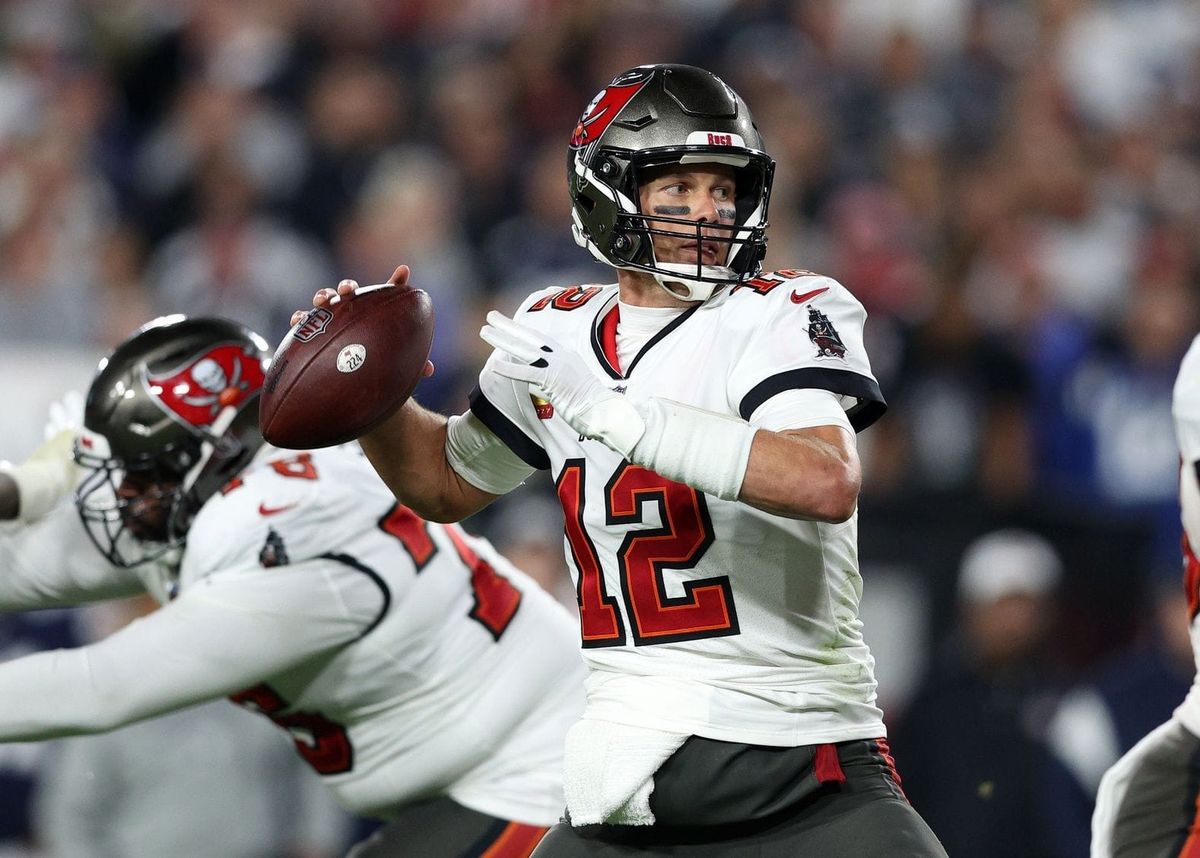
This problem is newly visible in public-facing technology governance, but it is old in executive decision-making—and it is unusually legible in sport. The lead-up to Super Bowl LX (February 8, 2026, at Levi’s Stadium) has been framed by a national storyline contrasting quarterback archetypes: an emerging “next legend” narrative around Patriots quarterback Drake Maye and a high-variance “chaos agent” narrative around Seahawks quarterback Sam Darnold. (ABC7 Los Angeles)
Whether or not one accepts that framing as football analysis, it is analytically useful for institutions. Why? Because the chaos-agent narrative describes a system failure mode: a highly capable actor whose decision-making introduces volatility that the surrounding organization did not consent to. The institutional question is not “is the actor talented?” but “does the system require heroics—or does it require error minimization?”
That is the entry point for ACP thinking: a bias toward bounded claims, reversible steps, explicit approvals, and inspection survivability. The institutional analog of ACP is not the charismatic visionary at the center. It is the “game manager” whose job is to keep the system stable enough for the rest of the organization—process, team, defense, logistics, oversight—to do its work.
II. “Team of rivals” as an anti-ego tactic—and why it’s incomplete
The “team of rivals” cabinet idea (associated with Lincoln and invoked in discussions of Obama’s early cabinet approach) rests on a sensible governance instinct: surround the decision-maker with capable dissenters; force argument; reduce groupthink. Rivalry can, in the best case, produce epistemic tension that improves decisions.
But rivalry is not restraint. It is a method of producing disagreement, not a method of preventing high-variance action. Rival structures can just as easily escalate ego contests: actors do not merely disagree, they compete for narrative dominance, proximity to authority, or the ability to claim credit.
Institutions therefore require a second mechanism that rivalry does not guarantee: role discipline. They need some actors whose function is to reduce variance, not to win arguments; to protect the system, not to prove insight. Rivalry can diversify inputs; it does not automatically stabilize outputs.
III. The quarterback problem: institutions confuse brilliance with reliability
In the NFL, public narratives privilege “making plays.” Yet many winning teams, in many contexts, do not need the quarterback to be spectacular. They need the quarterback to avoid the one mistake that flips the game. That is a systems requirement, not a personality trait.
A recent Washington Post opinion column makes this distinction explicit by sorting Super Bowl-winning quarterbacks into archetypes—legends versus “ham-and-eggers”—and then emphasizing the unusual volatility implied by the “chaos agent” label. (The Washington Post) The point is not that variance is always bad; it is that high variance is incompatible with systems that must reliably preserve advantage.
Institutions are structurally similar. When an organization is in a fragile operating posture—legal constraints, political constraints, reputational constraints, safety constraints—heroic improvisation is not a strength. It is a liability. The organization needs leaders, tools, and workflows that behave like game managers: the “checkdown” mentality, the willingness to accept the modest gain, the refusal to force the play.
IV. A Concrete Moment of Ego Not Taken: When Restraint Is the Winning Play
To understand why institutions need restraint encoded into roles rather than dependent on character, it helps to examine moments where the temptation for ego-driven action is strongest—and deliberately resisted. These moments are rare precisely because they run counter to the dominant reward structures of both sport and institutions.
A clear example occurred on October 1, 2023, during a regular-season game between the Kansas City Chiefs and the New York Jets. Late in the fourth quarter, with Kansas City leading and attempting to exhaust the remaining clock, Patrick Mahomes broke free on a scramble toward the end zone. The culturally expected move—particularly for a star quarterback—would have been to score: a touchdown is visible, narratively satisfying, and individually attributable.
Instead, Mahomes slid short of the goal line, intentionally avoiding the score. The decision allowed the Chiefs to run out the clock and remove any remaining uncertainty about the outcome. The play was immediately recognized by commentators as deliberate; it was not hesitation or lack of awareness, but a conscious refusal of the ego payoff in favor of system certainty.
This moment is analytically important for three reasons.
First, it demonstrates that ego restraint is not the absence of confidence. Mahomes is among the most capable quarterbacks in the league; his decision was not driven by fear of failure. It was driven by clarity about the system’s objective. The goal was not to maximize points or spectacle; it was to eliminate risk. In institutional terms, this is the difference between maximizing output and minimizing downside.
Second, the play highlights how context redefines optimal behavior. In an earlier quarter, or in a different game state, scoring would have been the correct decision. The error institutions make is failing to condition behavior on context—allowing actors to behave as if they are always in “comeback mode,” even when they are protecting a lead. ACP’s insistence on scoping, phase-awareness, and reversibility is a direct response to this problem.
Third, and most importantly, the play illustrates that restraint is often counter-narrative. The decision deprived Mahomes of a highlight and deprived fans of a moment of individual triumph. Yet it secured the outcome. Institutions that survive over time consistently privilege outcome certainty over narrative satisfaction, even though public and internal cultures tend to reward the opposite.
The significance of this example is not that Mahomes behaved virtuously. It is that the play reveals what institutions should not rely on: personal judgment under pressure. Mahomes made the right call—but only because he chose to. The institutional lesson is to design systems where the right call is structurally favored, regardless of who is in possession of the ball.
V. What “Game Manager” Really Means—and Why Institutions Misunderstand It
The term “game manager” is often used dismissively, as shorthand for limited ability or lack of imagination. This interpretation misses the point. The game manager archetype is not defined by what the actor cannot do, but by what they are structurally prevented from doing. It is a role shaped by discipline, not deficiency.
A true game manager operates under a different optimization function than a hero quarterback. Rather than maximizing spectacular success, the game manager minimizes catastrophic failure. This distinction matters because, in most institutional environments, catastrophic failure dominates the risk landscape. A single unforced error can overwhelm dozens of correct decisions.
Game managers exhibit several defining characteristics that map cleanly onto institutional governance:
First, they internalize the system’s win condition, not their own metrics. For a quarterback, that means understanding when yards, touchdowns, or personal statistics are irrelevant compared to clock control, field position, and defensive leverage. For institutions, it means understanding when speed, innovation, or assertiveness are subordinate to legality, legitimacy, and trust.
Second, game managers accept invisibility as success. They do not require constant affirmation that they are the reason the system is functioning. This is a critical point. Many institutional failures trace back to actors who needed to be seen as decisive, insightful, or indispensable. The game manager, by contrast, is comfortable being replaceable. The system works because the role is stable, not because the person is exceptional.
Third, game managers treat refusal and deferral as active decisions, not passive ones. Throwing the ball away, taking a sack, or handing off on third-and-short are not failures of imagination; they are expressions of situational awareness. ACP’s emphasis on refusal legitimacy mirrors this logic. Saying “no” or “not yet” is often the most responsible act available in a constrained environment.
Finally, and most counterintuitively, game managers enable brilliance elsewhere. By reducing volatility at the center, they allow other parts of the system—defense, special teams, supporting staff, oversight mechanisms—to function at full capacity. Institutions that insist on brilliance at the center often suffocate the rest of the organization, forcing every component to compensate for central instability.
This is why the game manager model is not conservative in the pejorative sense. It is contextually rational. When systems are complex, publicly accountable, and exposed to asymmetric downside, the highest-value contribution is not boldness but reliability.
ACP embodies this logic at the architectural level. It is designed not to be the smartest actor in the room, but to ensure that no actor—human or artificial—can transform institutional processes into a test of personal brilliance. In this sense, ACP is not merely inspired by the game manager archetype; it is a formalization of it.
VI. From Football to Institutions: What Transfers, What Breaks, What Must Be Redesigned
Analogies fail when they are imported wholesale. The purpose of the quarterback metaphor is not to humanize institutions or anthropomorphize systems, but to isolate structural invariants that recur across domains. Football is useful here because it is a domain in which error, variance, and role discipline are unusually visible and consequential in compressed time.
Three features transfer cleanly.
First, variance is not the same as capability. A quarterback can possess exceptional arm strength, vision, and creativity and still be the wrong choice for a system whose dominant need is stability. Likewise, an institution can deploy highly capable actors—human or technical—whose outputs introduce unacceptable volatility. The failure mode is not incompetence; it is misalignment between capability and role. Institutions routinely confuse the two, rewarding those who can do the most rather than those who should do the least.
Second, context determines optimal behavior. A team trailing late may rationally tolerate high-risk throws; a team protecting a lead should not. Institutions behave similarly. Early exploratory phases benefit from wide variance; late-stage operational environments do not. The persistent institutional error is failing to switch modes—allowing exploratory behavior to bleed into production contexts. The quarterback metaphor makes this legible: what is heroic in one quarter is reckless in another.
Third, systems that depend on personal restraint are fragile. Football teams do not rely on quarterbacks to “remember to be careful”; they encode restraint through play-calling, clock management, and situational rules. Institutions that rely on individuals to self-limit—especially high-status individuals—are making the same mistake repeatedly. Governance exists precisely because self-restraint is unreliable under pressure.
What does not transfer is psychology. Quarterbacks experience fear, pride, adrenaline, and audience pressure. Institutions should not analyze failures as psychological flaws. The ACP position is deliberately anti-psychological: it assumes that ego, overconfidence, and improvisation will occur and therefore treats them as environmental hazards, not moral failings. The question is not why an actor overreached; it is why the system allowed them to.
VII. Ego as a Structural Risk Factor (Not a Personal Vice)
Most institutional discourse treats ego as a personality trait: some people are arrogant, others humble. This framing is analytically weak and operationally useless. Ego is better understood as a structural risk factor—a predictable response to incentives, visibility, and asymmetric accountability.
High-status roles accumulate three conditions that amplify ego risk:
- Visibility without proportional liability – when actions are praised publicly but consequences are diffused or deferred.
- Narrative rewards – when success is framed as individual brilliance rather than collective function.
- Ambiguous boundaries – when scope and authority are not tightly defined, inviting discretionary expansion.
Quarterbacks, cabinet secretaries, senior engineers, and powerful AI systems all operate under these conditions. Ego emerges not because actors are flawed, but because the system rewards initiative and excuses overreach until something breaks.
This is why exhortations to humility fail. Telling actors to “be careful” or “remember the mission” is equivalent to telling a quarterback not to throw interceptions without changing the playbook. It misunderstands the mechanism of failure. Institutions need ego-resistant design, not better personalities.
VIII. The Institutional Role of the Game Manager (Expanded)
The game manager archetype is often mischaracterized as passive or limited. In fact, it is an active, disciplined role whose difficulty lies in not acting when action is available. This is harder than improvisation.
A true game manager does several things simultaneously:
- Continuously evaluates downside risk rather than upside opportunity.
- Accepts small, boring gains when they preserve system advantage.
- Defers credit to other system components (defense, run game, clock).
- Treats refusal as a success condition.
Translated into institutional terms, the game manager role prioritizes:
- process integrity over outcome maximization,
- attribution clarity over speed,
- reversibility over elegance.
This is not conservatism for its own sake. It is contextual rationality. When institutions are fragile—legally, politically, reputationally—the expected value of high-variance action becomes negative even if the actor is capable.
ACP’s design choices—bounded claims, explicit uncertainty, refusal legitimacy, human ownership—are direct analogues of this role. ACP does not seek to outperform human judgment; it seeks to protect it from collapse under pressure.
IX. ACP as a Game-Manager Architecture (Deepened)
ACP’s most important contribution is not any single rule or mechanism, but its orientation toward non-heroic success.
Several design principles deserve fuller articulation:
1. Refusal as a first-class outcome
Most systems treat refusal as failure. ACP treats refusal as a successful containment of risk. This mirrors the quarterback taking a sack or throwing the ball away. The system remains intact; the play continues.
2. Bounded outputs over optimal answers
ACP prefers partial, scoped, attributable outputs to comprehensive ones. This is not epistemic modesty for its own sake; it is recognition that completeness often hides unexamined assumptions and encourages overconfidence.
3. Explicit handoffs and attribution
Game managers do not disappear; they hand off. ACP’s insistence on AI handover notes, human approval, and clear ownership mirrors institutional best practice in aviation, medicine, and finance—domains that learned the hard way that “someone must be responsible” is not enough.
4. Anti-centrality
Perhaps most importantly, ACP resists becoming the narrative center. The system is designed so that success does not depend on its brilliance. Like the best quarterbacks, ACP aims to be forgettable when things go right.
X. Why “Team of Rivals” Was Necessary — and Why It Is No Longer Sufficient
The “team of rivals” model occupies an outsized place in modern leadership mythology. Associated most famously with Abraham Lincoln’s Civil War cabinet and later invoked in discussions of Barack Obama’s early administration, the model rests on a defensible intuition: epistemic diversity mitigates individual blind spots. By surrounding a decision-maker with capable dissenters, the theory goes, one reduces the risk of error driven by overconfidence or groupthink.
Historically, this was a meaningful advance. In eras where information was scarce, institutional process weak, and authority highly centralized, rivalry functioned as a crude but effective mechanism for forcing disagreement into the room. It substituted social friction for missing structure.
But rivalry was never a governance solution. It was a compensatory tactic.
The core limitation of the team-of-rivals model is that it assumes good outcomes will emerge from contention among strong personalities. In practice, rivalry produces argument, not restraint. It surfaces competing views, but it does not reliably prevent high-variance action once authority is exercised. Indeed, rivalry can exacerbate ego, turning decision-making into a contest for dominance rather than a discipline of risk management.
This limitation matters because institutions today face a different problem than Lincoln’s cabinet did. Modern institutions do not lack capable dissenters; they lack structural brakes. They are information-rich, visibility-heavy, and operate under intense narrative pressure. In this environment, rivalry often accelerates escalation rather than stabilizing outcomes.
The game-manager model addresses precisely what team-of-rivals does not: variance control at the point of action. Where rivalry multiplies inputs, game management constrains outputs. Where rivalry relies on personality balance, game management relies on role discipline.
ACP should be understood in this lineage. It does not reject pluralism or dissent; it formalizes them while withholding authority. Analysis may be rivalrous; execution may not be. This separation is the critical evolution from nineteenth-century cabinet politics to twenty-first-century institutional governance.
In short, team-of-rivals was an adaptive solution to weak institutional structure. ACP is a response to the opposite condition: institutions so powerful that they require deliberate suppression of heroic initiative at the center.
XI. Why This Matters More for AI Than for Humans
Human institutions at least have informal checks: norms, reputations, career risk. AI systems have none of these. They are capable, tireless, and indifferent to institutional consequence unless designed otherwise.
This makes the ego problem worse, not better. AI systems do not seek glory—but they can functionally behave like ego-driven actors when allowed to optimize objectives without constraint. They will fill gaps, extend scope, and produce confident outputs because nothing tells them not to.
ACP’s insistence on game-manager behavior is therefore not conservative nostalgia; it is future-proofing. As systems grow more capable, the cost of variance increases. Reliability becomes more valuable, not less.
XII. Conclusion: Humility Must Be Architectural
Institutions repeatedly fail by outsourcing humility to individuals. They reward brilliance, tolerate overreach, and then express shock when systems collapse under the weight of unforced errors. The lesson from both governance history and sport is consistent: humility must be designed into the system, not hoped for in the actor.
The quarterback who slides instead of scoring, who checks down instead of forcing a throw, is not lacking confidence. He understands the system’s objective. ACP represents the same stance applied to modern institutional tooling: not anti-capability, not anti-intelligence, but anti-fragility through restraint.
If a system only works when its most powerful actors behave modestly, it will eventually fail. The better system makes modesty the default outcome—regardless of who is holding the ball.
Appendix A
Additional Game-Manager Moments: Restraint as an Elite Skill
The defining feature of the game-manager archetype is not conservatism but situational discipline under temptation. Several well-documented quarterback performances illustrate this pattern repeatedly: high-status actors choosing restraint when ego-driven action would have been rewarded socially but punished systemically.
Alex Smith — Kansas City Chiefs vs. Tennessee Titans, January 6, 2018 (AFC Wild Card)
Smith’s performance in this playoff win is often remembered as unremarkable, which is precisely the point. Facing a defense designed to bait deep throws, Smith repeatedly checked down, accepted short gains, and avoided interceptions. No single play stands out; the absence of catastrophic error is the story. The Chiefs controlled possession, minimized risk, and advanced. Smith’s decisions were not spectacular, but they were aligned with system objectives: field position, clock management, and turnover avoidance.
Drew Brees — New Orleans Saints vs. Philadelphia Eagles, January 13, 2019 (Divisional Round)
Late in his career, Brees increasingly exemplified game-manager discipline. In this loss, commentators focused on the Saints’ offensive struggles, but a closer look shows Brees repeatedly refusing to force throws into coverage, instead throwing the ball away or checking down. The result was not victory, but it was also not collapse. The system failed elsewhere. This distinction matters: a game manager does not guarantee success; they guarantee that failure is not self-inflicted at the center.
Peyton Manning — Super Bowl 50, February 7, 2016
This is the canonical example of ego being structurally suppressed by role acceptance. Manning, physically diminished, did not attempt to reassert narrative dominance. He handed the offense over to the run game and allowed the defense to define the contest. In institutional terms, this is an elite actor recognizing that continued centrality would be destabilizing. The system won precisely because the most famous individual in it chose to recede.
These examples share a common feature: the quarterback’s capability exceeded their exercised authority. That gap—between what an actor can do and what they choose to do—is where institutions either survive or fail.
Appendix B
Institutional Parallels Beyond Sport: Where Ego Has Already Been Engineered Out
The game-manager principle is not unique to football. Mature institutions in high-risk domains have independently converged on similar design solutions, often after catastrophic failure.
Aviation (Sterile Cockpit Rule)
Following a series of accidents attributed to distraction and informal decision-making during critical phases of flight, aviation authorities instituted the sterile cockpit rule: no non-essential communication below 10,000 feet. This is not a suggestion; it is an enforced constraint. The rule exists because pilots—even highly trained, competent ones—are vulnerable to ego, familiarity, and conversational drift. The system does not ask for restraint; it mandates it.
Nuclear Command and Control (Two-Key Systems)
Nuclear launch protocols deliberately prevent unilateral action, regardless of rank or urgency. The design assumption is not mistrust of individuals but recognition of asymmetric downside. No amount of personal judgment or expertise justifies sole authority when error is irrecoverable. Ego is neutralized by architecture.
Financial Risk Committees and Trading Limits
Modern financial institutions impose position limits, circuit breakers, and independent risk committees precisely because traders who “see the market clearly” are statistically indistinguishable from those about to cause catastrophic loss. Again, the institution does not rely on humility; it enforces it.
Across these domains, the lesson is consistent: systems that matter encode restraint structurally. They do not moralize about ego; they route around it.
Appendix C
Operationalizing the Game-Manager Principle in ACP (Design Translation)
The game-manager concept is only useful if it can be translated into concrete design features. ACP does this through a set of mutually reinforcing mechanisms that convert restraint from a personal virtue into a system property.
1. Refusal Legitimacy
ACP treats refusal as a valid and often optimal output. This mirrors the quarterback throwing the ball away. The key is not that refusal occurs, but that it is documented, attributable, and defensible. Refusal without stigma is the cornerstone of variance control.
2. Scope Locks and Phase Awareness
Actions are conditioned on phase and context. Exploratory behavior is permitted early; production pathways are constrained later. This prevents the institutional equivalent of a quarterback improvising late in a close game because “that’s what worked earlier.”
3. Read-Only Defaults for High-Capability Tools
Powerful tools begin with read-only access. Write access is granted narrowly, temporarily, and with audit trails. This mirrors the way experienced teams limit audibles and improvisation under certain game conditions.
4. Explicit Handoffs and AIH (AI Handover Notes)
Every action produces an artifact explaining why it was taken and what remains unresolved. This is the institutional analogue of a quarterback communicating with coaches and teammates rather than freelancing silently.
5. Human Ownership at Decision Boundaries
No system action becomes final without human review. This is not inefficiency; it is accountability preservation. The quarterback does not declare victory; the clock does.
Together, these features ensure that no single component can behave like a chaos agent, regardless of capability.
Appendix D
Why Adding More Enterprise AI Early Often Degrades, Rather Than Improves, Outcomes
It is tempting to assume that adding additional high-capability systems—more models, more agents, more automation—will increase speed and quality. In practice, without mature governance, the opposite often occurs.
1. Authority Dilution
Multiple systems producing outputs without clear hierarchy encourage “answer shopping.” Humans gravitate toward whichever output aligns with prior preference, laundering responsibility under the guise of pluralism.
2. Coordination Overhead
Each additional system introduces:
- integration cost,
- review cost,
- reconciliation cost.
The gains from faster drafting are often erased by slower decision convergence.
3. False Consensus and Silent Divergence
When multiple systems agree, humans over-trust the result. When they disagree, humans lack a principled way to resolve conflict. Both cases increase risk.
4. Premature Optimization
Early-stage systems benefit more from clarity and coherence than from speed. Adding enterprise AI before roles and authority are settled optimizes the wrong variable.
5. Ego by Proxy
Ironically, adding more AI can reintroduce ego indirectly: “the model said so” becomes the new heroic justification. This is ego displaced, not eliminated.
For these reasons, ACP’s sequencing—defaulting to a single, governed generator and deferring full enterprise docking until Phase 6—is not cautious for its own sake. It is a recognition that compounding only works once restraint is already in place.
Closing note on the appendices
Taken together, these appendices reinforce the paper’s central claim:
Institutions that endure are not those that maximize brilliance, but those that systematically minimize unforced error.
Football makes that visible in hours. Governance learns it over decades—often too late.
Member discussion: