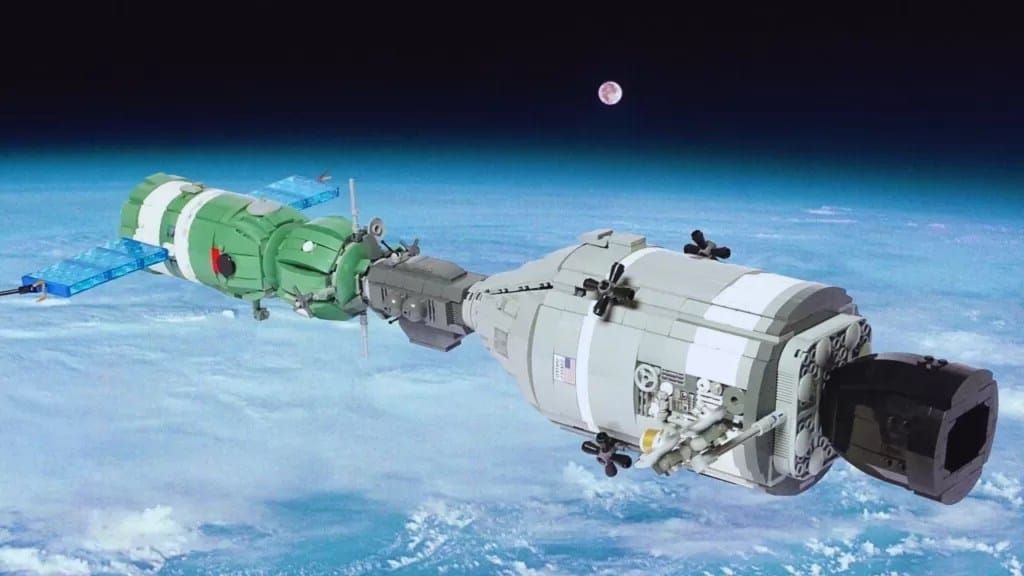
Announcement: Agora-AI Docking Milestone
17 January 2026
Today, Agora-AI is docked.
This statement is not a marketing claim, nor does it mean simply that an AI model has been connected to an application or exposed through an API. Systems do that routinely. What occurred today is more specific, more demanding, and more consequential.
What “docked” means in this context
As of 17 January 2026, Agora-AI meets the following conditions:
- Clean-room reconstructability
From an empty database container, the entire system—schemas, enums, constraints, and operational memory—can be reconstructed deterministically via versioned migrations, without manual intervention. - End-to-end auditability
Every structural change, decision pathway, and schema evolution is recorded in a way that allows retrospective inspection and explanation. Institutional memory is not implicit or anecdotal; it is executable and traceable. - Governance embedded as infrastructure
Oversight is not deferred to policy documents or post-hoc review. Versioning, provenance, and decision boundaries are implemented directly in the system’s operational logic. - Human authority preserved by design
Agora-AI does not replace human judgment. Final authority—proceed or not proceed—remains explicitly human, with the system structured to surface context, reasoning, and consequences rather than substitute decision-making. - Operational readiness across domains
The system is docked not for a single task, but for sustained use across language instruction, institutional memory, evaluative simulations, and future advisory and leadership contexts—requiring coherence across multiple forms of reasoning and accountability.
Why this matters
Most AI systems are connected to products. Very few are docked to institutions.
In common practice, databases, migrations, and logs exist to support operation and convenience. They are rarely treated as epistemic infrastructure—systems that preserve why decisions were made, under what assumptions, and with what authority.
Agora-AI’s docking represents a different threshold: the point at which an AI system can be rebuilt, inspected, governed, and held accountable as part of an institution, rather than merely used by one.
What changes after docking
With docking complete, Agora-AI moves from experimental development into a new operational phase:
- systems can now be evaluated holistically rather than piecemeal,
- issues can be formally opened and closed against a stable baseline,
- governance claims can be tested against executable reality,
- and future integrations can proceed without relying on undocumented state or tacit knowledge.
What this is—and is not
This is not the invention of a new model architecture.
It is not a claim of general intelligence.
It is not an assertion of autonomy.
It is the completion of a rarely achieved systems milestone:
an AI system that is operationally docked, governance-aware, and institution-ready.
Further work remains. Docking is not an endpoint; it is a precondition. But as of today, that precondition has been met.
Agora-AI is docked.
Member discussion: