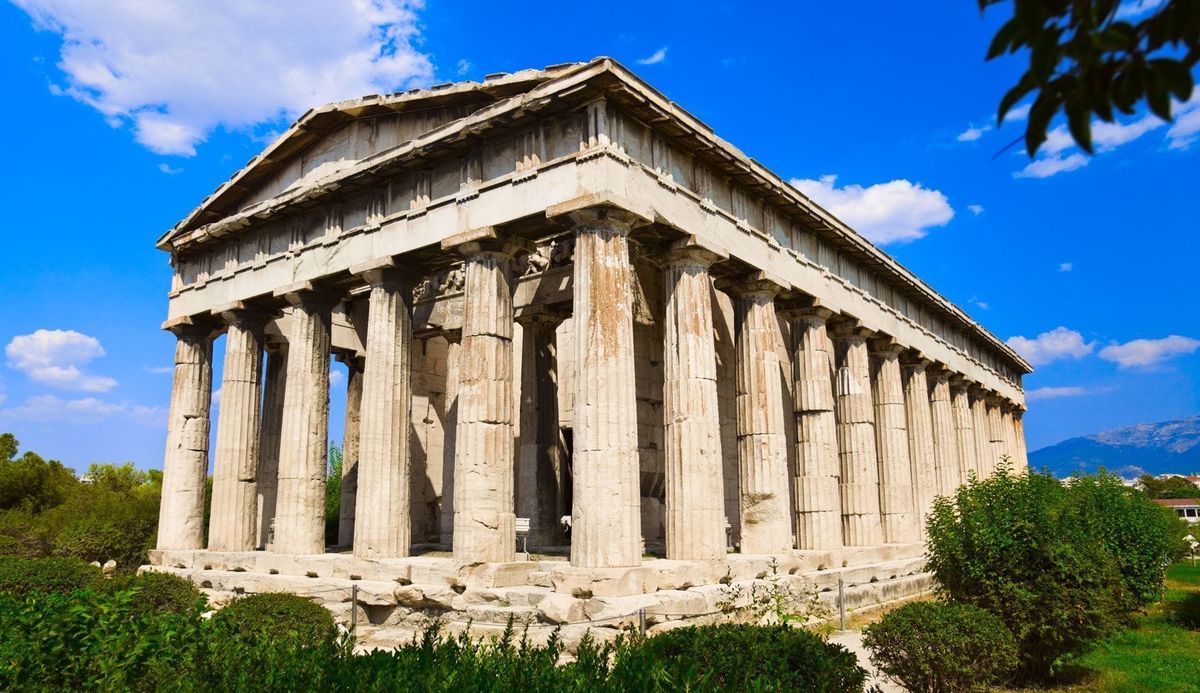
What Is the Agora in ACP?
The Agora is not a forum, a comment section, or a social feed. It is not “community engagement” in the contemporary, platform sense. It is a governance space — and that distinction matters.
Historically, the Greek agora was not primarily a place of debate or performance. It was a shared civic space where:
- information circulated,
- decisions were shaped,
- disputes were surfaced,
- norms were negotiated,
- and accountability was visible.
Importantly, the agora was not neutral, but it was bounded. Speech occurred within understood constraints: custom, law, reputation, and consequence. Not everything belonged there, and not everyone spoke in the same way or with the same authority.
ACP’s Agora revives this function — deliberately — inside an AI-mediated system.
The Agora Is a Counterweight to Model Authority
In general AI systems, authority flows in one direction:
model → user
Even when framed as “assistive,” the model’s outputs implicitly dominate. The user may question, but there is no shared epistemic space where claims are tested, refined, or contextualized beyond the model’s internal reasoning.
The Agora exists to break that asymmetry.
Within ACP:
- Aalam is not the final arbiter.
- Model outputs are inputs into a larger interpretive space.
- Claims can be contextualized, constrained, questioned, or deferred.
The Agora is where:
- uncertainty is made explicit,
- disagreement is permitted without collapse,
- and judgment is distributed rather than centralized.
This is why the Agora is inseparable from governance. Without it, ACP would collapse into just another “better chatbot.”
Not a Crowd, Not a Mob, Not Reddit
It’s tempting to imagine the Agora as a scaled-up community discussion. That would be a mistake.
The Agora is curated, normed, and role-aware.
Participants are not interchangeable:
- teachers,
- students,
- administrators,
- external experts,
- and AI variants
do not occupy the same position or speak with the same function.
This avoids two common failures:
- Crowd epistemology, where volume replaces judgment.
- Platform flattening, where all speech is treated as equal regardless of expertise or responsibility.
The Agora preserves difference — in role, in perspective, in obligation — while still allowing shared inquiry.
The Agora as a Memory-Bearing Space
Another crucial function: the Agora remembers.
Unlike ephemeral chats, the Agora:
- preserves unresolved questions,
- tracks evolving interpretations,
- records why decisions were made,
- and surfaces patterns over time.
This is essential for ACP’s commitment to learning from error rather than punishing it. Postmortems, reflective essays, norming questions, and governance debates all belong here.
Without the Agora, ACP would have memory but no wisdom.
With it, memory becomes usable.
Why This Matters Now
Modern AI systems increasingly simulate confidence, coherence, and authority. What they do not provide is civic structure — a place where meaning is negotiated rather than generated.
The Agora is ACP’s answer to that gap.
It is:
- slower than a chatbot,
- less flashy than an agent,
- and more demanding of humans.
But it is also what makes ACP capable of restraint, reflection, and responsibility — at scale.
In short:
Aalam reasons.
The Docking Harness constrains.
The Agora governs.
Without the Agora, ACP would be clever.
With it, ACP becomes institutional.
That’s the difference.
Member discussion: