ACP treats “AI creates new knowledge” as a category temptation: it compresses a long institutional pipeline into a single verb (“create”) and then smuggles authority in through the back door.
On ACP’s view, knowledge is not a property of an output. It is a status conferred by institutions when a claim has been sufficiently stabilized to be relied upon in action. That stabilization has always involved social machinery: standards of evidence, contestation rights, replication norms, liability structures, and the ability to record and revisit error. AI changes the speed and shape of candidate-generation, but it does not replace those machinery without collapsing legitimacy.
So ACP reframes the question. Instead of asking whether AI can create knowledge “in principle,” ACP asks: when an AI system produces a claim, who is permitted to treat it as decision-relevant, under what conditions, and with what accountability if it is wrong? This is not an evasion; it is the governance locus. Institutions do not fail because they answered the metaphysical question incorrectly; they fail because they let claims harden into decisions without ownership.
In that framing, AI clearly contributes to discovery. It can generate hypotheses, compress search spaces, and surface patterns that humans did not anticipate. But those are epistemic candidates, not authorized knowledge. The critical boundary is authorization: who may treat a candidate as reliable enough to act on. ACP insists that authorization must remain contestable, role-bound, and auditable. If an institution treats model output as self-authorizing—by confidence score, benchmark performance, or reputational aura—that is not “AI creating knowledge.” It is institutional misdelegation (authority laundering via technical artifact).
Therefore ACP’s position is strict but practical: AI may accelerate the production of candidates for knowledge; it may even restructure research practice; but it cannot itself hold epistemic authority or decision authority. Knowledge remains an institutional status, conferred under procedures that preserve contestability and ownership. Any system that bypasses that conferral process may still be useful, but it is governance-unsafe: it converts speed into legitimacy and performance into authority.
Applying the ACP Framing to AlphaFold
AlphaFold is the strongest good-faith test case because it is genuinely transformative while still fitting inside classical scientific validation. It lets us separate (a) novel candidate generation from (b) knowledge authorization without relying on hype.
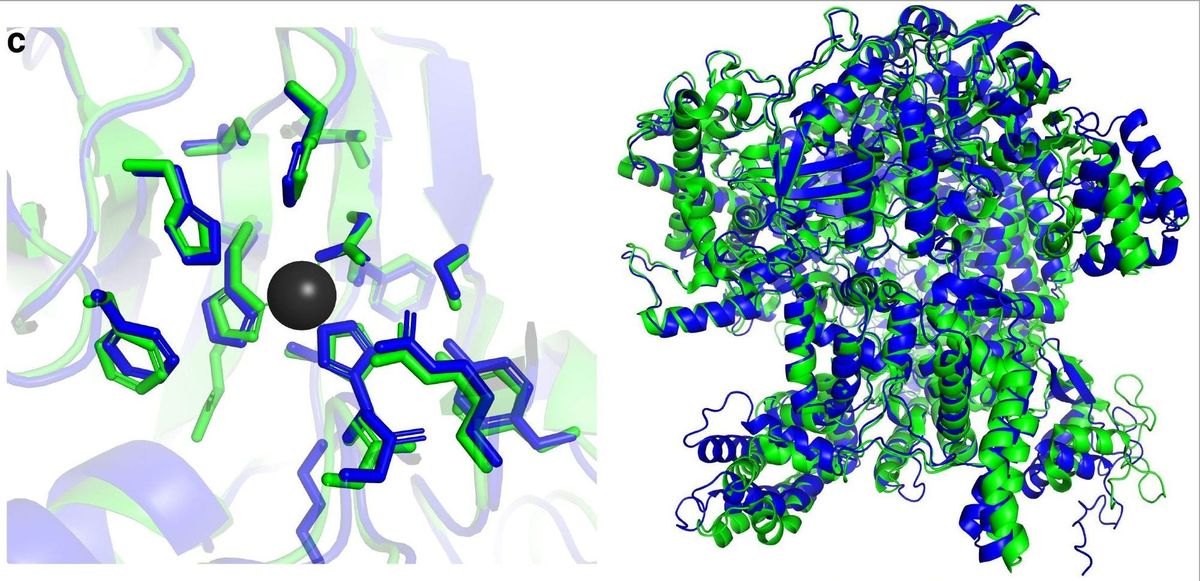
AlphaFold outputs predicted protein structures. Those outputs often have high accuracy, and—crucially—they arrive at a scale and speed that changed what research is feasible. This is real epistemic acceleration. Scientists can now decide what to test, what to prioritize, what to model downstream, and where experimental effort is worth spending.
Here is the ACP hinge: AlphaFold’s predictions became “knowledge” only insofar as institutions treated them as hypotheses with a validation pathway, rather than as facts with inherent authority. In other words, AlphaFold did not replace the social machinery of knowledge; it fed it.
ACP would describe AlphaFold’s contribution as producing unusually strong epistemic candidates (a compressed search space of plausible structures). The institutional act of turning those candidates into knowledge remained downstream: experimental confirmation, replication, community uptake, correction over time, and the embedding of results into further work. Where that pipeline remained intact, AlphaFold is not a counterexample to the “AI doesn’t create knowledge” claim; it’s an example of AI accelerating the pre-authorization stage.
The governance risk appears precisely when an institution shifts from “this is a candidate with uncertainty” to “this is reliable enough to treat as settled”—without naming who owns that shift. With AlphaFold, that risk can show up in softer forms: labs that stop validating because confidence metrics feel sufficient; reviewers who treat predicted structures as “already known”; downstream decisions (drug targets, mechanism claims) that quietly inherit the prediction as a premise rather than a hypothesis.
ACP’s diagnostic questions land cleanly here:
- Who is authorizing reliance? A PI? a journal? a regulator? a pipeline owner?
- What is the decision that is being shaped? Experimental prioritization is different from clinical action.
- What happens when it’s wrong? Is there an explicit correction pathway and an incentive to use it?
- Is contestation protected? Can a junior scientist say “we need to validate” without being punished for slowing the lab?
If those governance conditions are present, AlphaFold demonstrates that AI can be epistemically powerful without becoming epistemically sovereign. If they are absent, AlphaFold becomes the classic institutional failure pattern: an artifact that is useful gets treated as authoritative, and authority laundering begins—not necessarily through malice, but through time pressure, incentives, and deference to technical prestige.
So AlphaFold is the orienting example for ACP’s sidestep. It shows why “AI creates knowledge” is the wrong battleground: the important question is not whether the output is brilliant, but whether institutions preserve the authorization boundary that prevents brilliance from becoming unowned power.
Member discussion: