Technological acceleration is often discussed as a shared gamble. The benefits are framed as collective, the risks as diffuse, and the future as something “we” are entering together. This framing obscures a basic structural fact: risk is not experienced uniformly, and the ability to avoid or absorb harm is unevenly distributed.
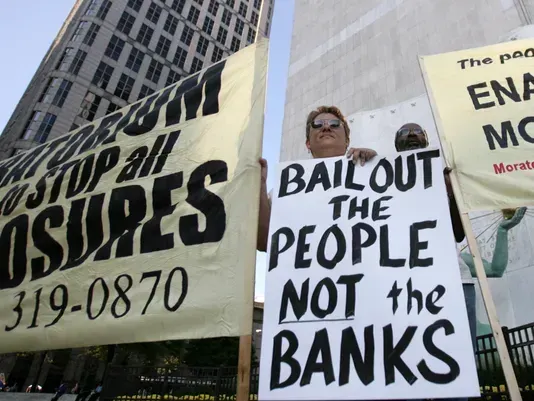
In practice, the costs of premature deployment tend to be socialized, while the means of protection are privatized.
This asymmetry is not primarily ideological. It is a function of wealth, mobility, institutional access, and optionality. Those with capital, influence, or geographic flexibility are better positioned to insulate themselves from downside risk, whether through financial hedging, regulatory arbitrage, private services, or physical exit. Those without such options absorb the consequences of systems deployed at scale, often without meaningful recourse.
In the context of AI, this pattern is visible across multiple domains. Workers exposed to automation experience job displacement before retraining infrastructures exist. Communities subject to surveillance technologies bear monitoring costs without proportional say in deployment. Public institutions integrate new systems under resource constraints that limit their ability to refuse or modify them. In each case, exposure is not a matter of choice. It is a condition imposed by adoption decisions made elsewhere.
Meanwhile, those driving or financing deployment often retain exit options. Capital can move. Talent can relocate. Firms can pivot. Individuals with sufficient resources can substitute private solutions for degraded public ones. This insulation alters how risk is perceived. Harms that are manageable from a position of privilege appear abstract or temporary; harms that are cumulative and sticky appear peripheral to strategic decision-making.
The ability to exit is particularly important. Exit changes moral calculus. When those who benefit from acceleration can avoid its costs, the urgency of mitigation diminishes. The system does not require indifference to suffering. It requires only that suffering be experienced by others, at a distance, and over time.
This dynamic also reshapes political accountability. Socialized risk tends to produce diffuse grievance rather than concentrated opposition. No single actor appears responsible. Harm accumulates incrementally, across sectors and jurisdictions, making coordinated response difficult. In contrast, the benefits of scale are often concentrated and visible, reinforcing narratives of progress and inevitability.
The result is a skewed feedback loop. Signals from those bearing the brunt of deployment arrive slowly and weakly, while signals from those benefiting arrive early and loudly. Policy, investment, and research priorities follow the stronger signal. Over time, this reinforces the belief that acceleration is broadly acceptable, even as localized harms intensify.
This asymmetry is often rationalized through appeals to transition. Disruption is framed as temporary; adaptation as inevitable. Those affected are encouraged to reskill, relocate, or endure, while the systems driving disruption continue to expand. Responsibility is individualized, while causation remains structural.
Importantly, this pattern does not depend on secrecy or bad intent. It emerges wherever decision-making authority is decoupled from exposure to consequence. When those who decide can avoid the costs of being wrong, error becomes tolerable. When those who cannot avoid those costs lack decision power, harm becomes normalized.
Understanding this distributional reality is essential for evaluating claims about collective benefit or shared sacrifice. Without examining who bears risk and who retains protection, discussions of innovation remain abstract. They fail to account for the lived experience of those for whom “progress” is not optional.
The next essay examines this asymmetry more sharply, focusing on why some actors can afford to be wrong—repeatedly—and how limited liability, portfolio logic, and institutional insulation interact to weaken democratic accountability.
AIH|v1
art=essay
arc=ARC5
mode=canon
auth=informative
epi=uncert
ops=read,compare,cite!policy
route=gov>audit>human
ttl=stable
Member discussion: